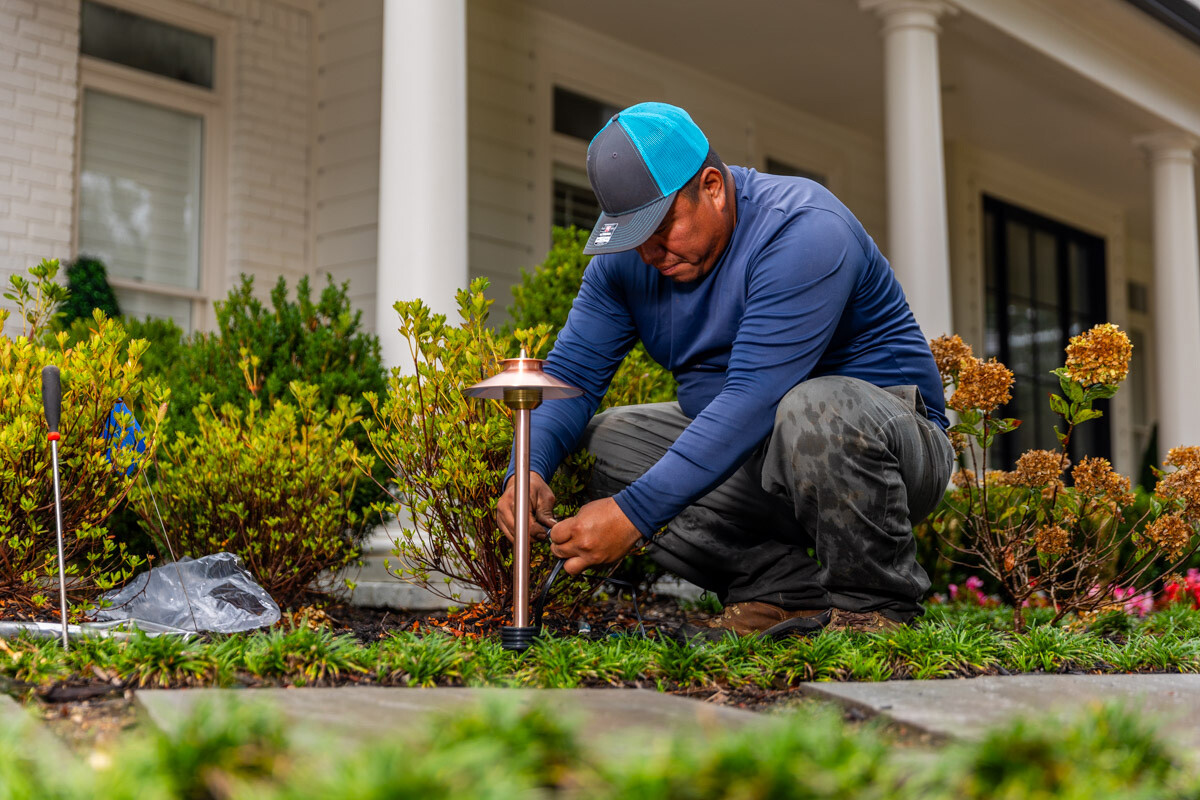
Wondering where to place landscape lights around your home? Should they go near the house, along walkways, or beside your favorite trees?
The best places for landscape lights are around walkways, steps, entrances, driveways, trees, and architectural features that you want to highlight. But the direction, angle, and brightness of each fixture can completely change the results.
The right placement can make your Memphis home more inviting after dark while keeping paths and steps easier to navigate without uncomfortable glare.
Let’s look at how thoughtful fixture placement can help you achieve both.
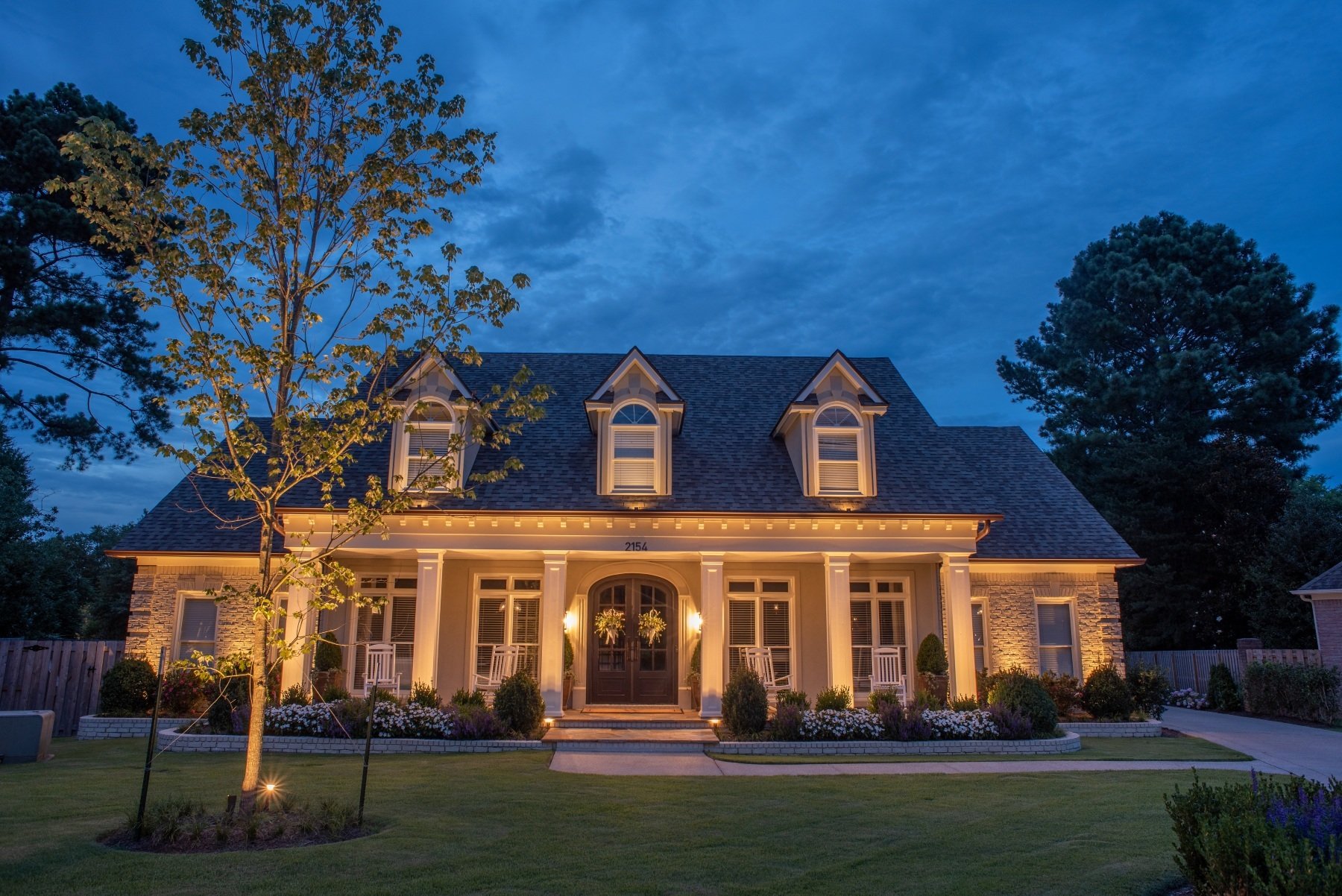
Start With a Landscape Lighting Placement Plan
Start by thinking about how you use your property after dark. Where do guests walk? Are there steps that are difficult to see? Which trees or stone features deserve attention?
In most cases, outdoor lighting should serve one or more of three purposes: improve visibility, highlight something beautiful, or make an outdoor space more enjoyable. Not every part of your yard needs the same amount of light.
You might want a brighter, more functional effect near steps and an outdoor kitchen, while choosing a softer look around garden beds and seating areas. Think about your property as a whole rather than placing fixtures wherever there's an empty spot.

How to Position Landscape Lights Along Walkways and Steps
Walkways are often one of the first areas homeowners think about lighting. And for good reason! You want visitors to see where they're going as they approach your front door or walk through your backyard.
Traditional path lights are one option. They can be positioned along the edges of a walkway, with the light directed down onto the walking surface. Staggering fixtures can look more natural than placing identical lights across from one another.
But path lights aren't your only choice. Downlighting, sometimes called moonlighting, uses fixtures mounted above the walkway to cast a soft glow downward. This illuminates a path without making fixtures the focus.
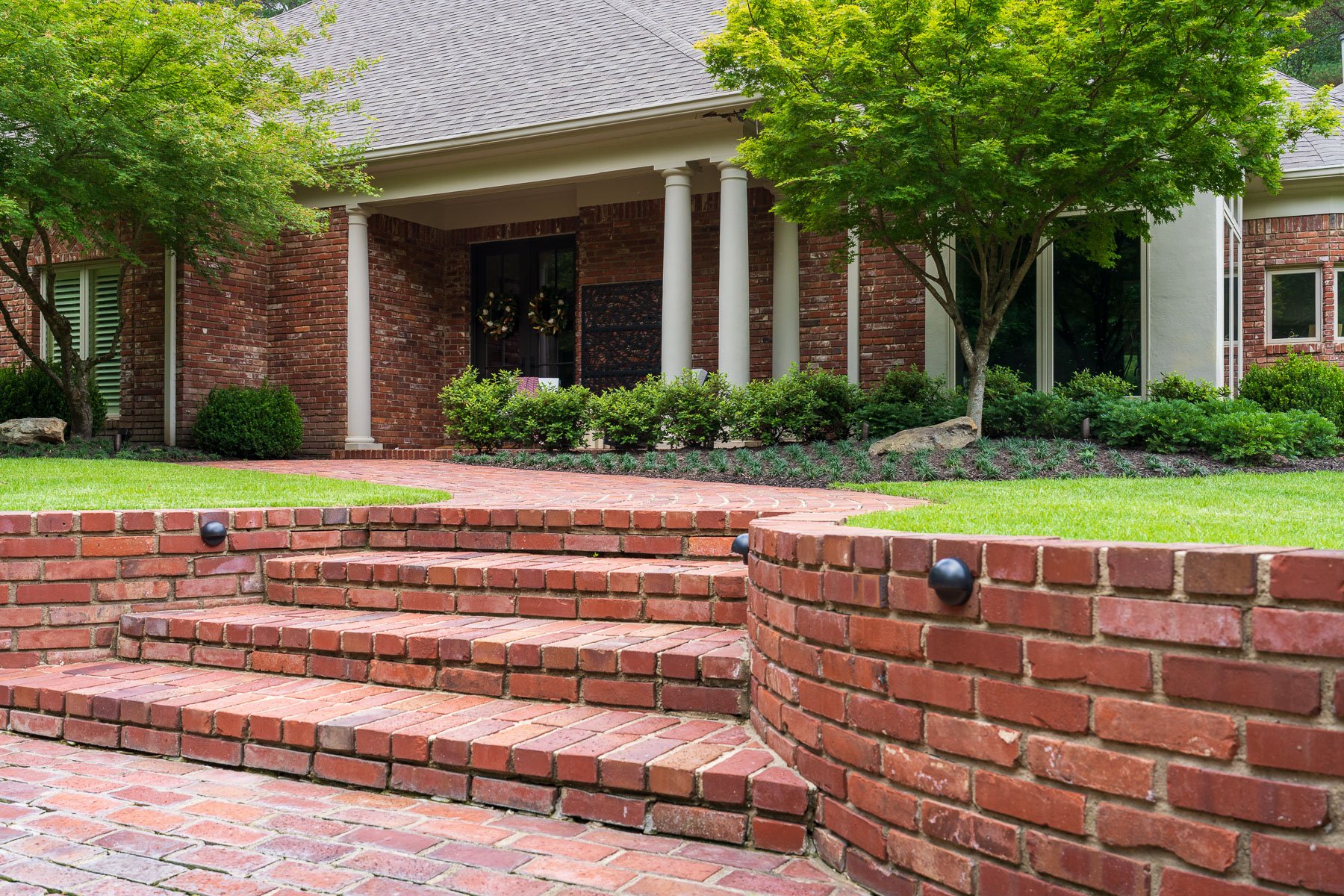
Steps deserve special consideration. Lights can be incorporated into nearby walls, step risers, or other appropriate locations so people can recognize changes in elevation. The goal is to make each transition visible without creating harsh glare.
For more ideas, see our guide to pathway and driveway lighting.
Where to Put Outdoor Lights Along Driveways and Entrances
Driveway lighting has to work from two perspectives: someone driving a vehicle and someone walking toward the house. That's why it's so important to think about where the light is pointing.
One common mistake is lining both sides of a driveway with bright fixtures at perfectly even intervals. This can create an “airport runway” appearance, while lights aimed toward approaching drivers can make it harder to see.
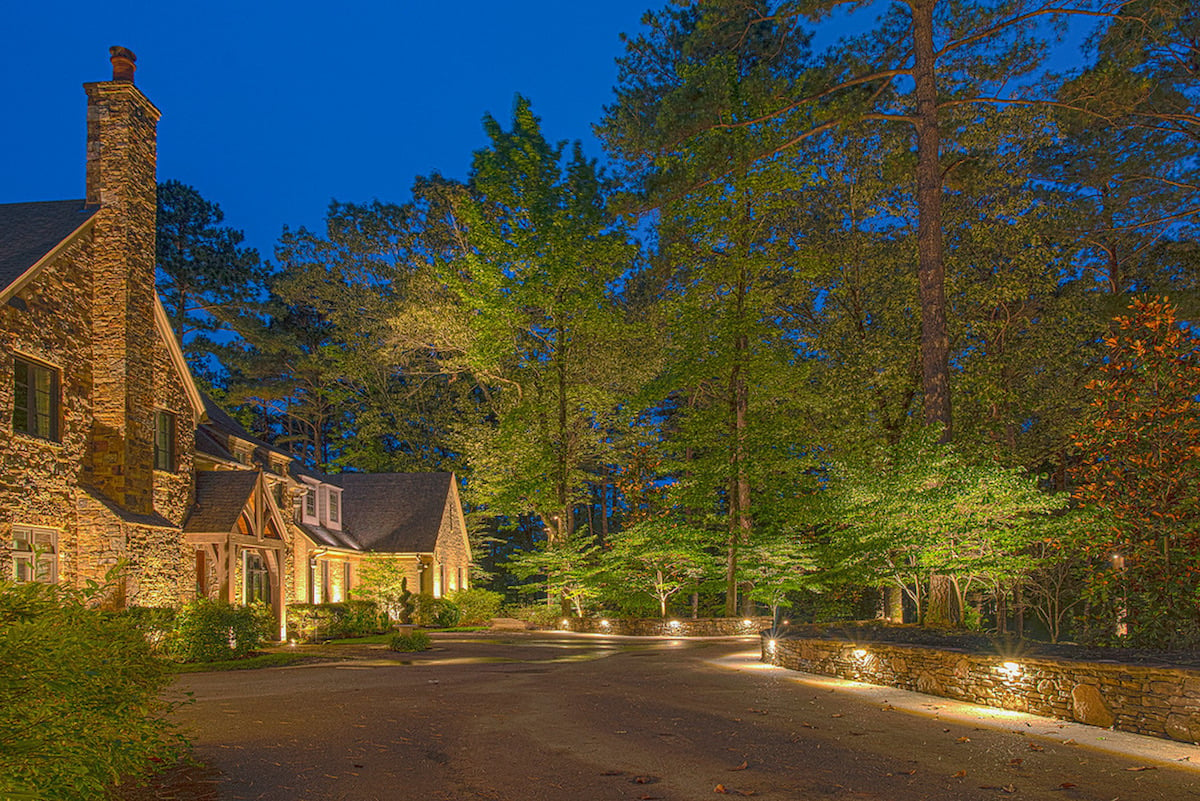
Instead, a designer might use carefully spaced fixtures, downlights, or lighting that highlights nearby trees and landscape features. These approaches can help define the driveway without making every edge overly bright.
The front entrance also deserves attention. A well-lit porch, doorway, or set of columns helps guests find their way and makes your home feel welcoming. New lighting should complement existing porch lights rather than compete with them.
If you have a longer or winding drive, our guide to lighting a long or curved driveway explores those special considerations.
Where to Place Landscape Lights Around Trees and Gardens
A beautiful tree can become one of the most striking features of your property after dark. The right lighting can bring out the shape of its branches, the texture of its bark, or the spread of its canopy.
Uplighting is a popular technique for trees. A fixture is positioned near the tree and aimed upward to showcase the trunk, branches, or canopy. However, the best distance and angle depend on the tree's size, shape, and the effect you're trying to create. A small ornamental tree needs a different approach than a large, mature tree.
You can also create a silhouette by positioning a light to illuminate a wall or other surface behind a shrub or distinctive plant. Shadowing uses light to cast interesting patterns from branches onto nearby surfaces.
Consider plant growth, too. A fixture that looks perfect today could become hidden by foliage as the landscape matures.
Keep in mind that not every tree needs its own spotlight. Sometimes highlighting just a few important features produces a more elegant design than trying to light everything.

How to Position Outdoor Lights Around Your Home's Architecture
Stonework, brick, columns, and other architectural details can take on an entirely different appearance after dark. But where you position the lights determines whether those features stand out naturally or appear overly bright.
There are several ways to position lights to achieve different effects. Wall washing spreads light across a broader surface to create a relatively even glow. Grazing positions the light closer to a textured wall so the angle emphasizes its surface and shadows. Narrower accent lighting can draw attention to an individual column or other interesting feature.
Even moving a fixture a few inches can change the shadows or create an uncomfortably bright spot. That's why the angle and distance matter just as much as the feature you're trying to illuminate.
You also don't want outdoor fixtures shining directly through bedroom or living room windows. A beautiful design should look good from inside your home as well as from the street.
We've explored these considerations further in our article about how close outdoor lights should be to structures.

Positioning Lights Around Patios and Outdoor Living Areas
Whether you're entertaining friends or enjoying a quiet evening, lighting should support the atmosphere.
Around a patio, softer lighting can help define seating areas and make it easier to move between spaces. Downlights mounted in appropriate overhead locations can provide a natural-looking glow. Lights placed near surrounding plants, walls, or landscape features can add depth without putting a bright beam directly into someone's face.
Task areas are a little different. If you have an outdoor kitchen, you'll need enough light to see what you're preparing. Around a fire pit or casual seating area, a softer effect may feel more comfortable.
Good outdoor patio lighting also accounts for where people sit and what they'll see. A fixture that looks great from the yard might create distracting glare when you're relaxing in your favorite patio chair.
Not sure where to begin? You can request a consultation to talk through lighting options for your property.

How Far Apart Should Landscape Lights Be Placed?
There's no single spacing measurement that works for every property.
Spacing depends on the fixture's beam spread and brightness, the size of the feature you're illuminating, nearby lighting, and the effect you want.
For example, two fixtures illuminating a broad stone wall may need completely different spacing than lights positioned along a narrow walkway. Even when using the same type of fixture, the right distance can change depending on the surrounding landscape.
Lights placed too close together can make an area feel washed out. Lights spaced too far apart might leave important walking surfaces difficult to see.
Some shadows are intentional. In fact, the contrast between light and dark is often what makes landscape lighting so attractive. The key is knowing where that contrast adds beauty and where it could interfere with visibility.
Evaluate the lights after sunset so you can adjust beam angles and check the view from paths, seating areas, and inside the home.

Common Outdoor Lighting Placement Mistakes to Avoid
Even attractive fixtures can disappoint when poorly positioned. Watch for:
- Glare: A fixture that shines into your eyes, a driver's line of sight, or a neighbor's windows can be distracting and uncomfortable.
- Overlighting: Too many bright lights can flatten the appearance of your home and take away from the subtle effects you're trying to achieve.
- Poor focal points: Lighting every shrub equally can make it difficult to appreciate the architectural or landscape features that really deserve attention.
- Ignoring maintenance: Fixtures hidden by growing plants, affected by lawn work, or difficult to access may need more attention over time.
A well-designed lighting system should look intentional, with each fixture contributing to the overall effect. Sometimes the most important decision is knowing where not to add a light.

Frequently Asked Questions About Landscape Lighting Placement
Should landscape lights point toward or away from the house?
It depends on what you're lighting. Uplights may point toward a wall to accent architectural details, while pathway or downlights should illuminate walking areas. The important thing is controlling the light so it doesn't shine into windows or people's eyes.
Can existing landscape lights be repositioned?
Often, yes. If your lighting looks uneven or creates glare, adjusting the position or angle of some fixtures may improve the effect. A lighting professional can evaluate whether repositioning is enough or whether different fixtures would work better.
Does every tree or walkway need its own set of lights?
Not necessarily. Nearby lighting can sometimes serve more than one purpose. A downlight might illuminate a walkway and part of a garden bed, for instance. Thoughtful placement can help you avoid adding fixtures that don't contribute much to the overall design.
Get the Right Outdoor Lighting Placement for Your Memphis Home
You don't need to illuminate every corner of your property to get beautiful results. What matters is choosing the right places for light and understanding how those decisions affect the way your home looks and feels after dark.
At Mid South Outdoor Lighting & Audio, our landscape lighting design process considers how you use your outdoor spaces, which features deserve attention, and how to balance light and shadow. From walkways and entrances to mature trees and backyard gathering areas, thoughtful placement can make all the difference.
Ready to explore the possibilities for your property? Request a consultation, and let's talk about outdoor lighting for your Memphis-area home.