Your outdoor lighting does not have to look or function exactly the same every night.
The lighting you want when guests are arriving may be different from what feels right during dinner on the patio. You may want the backyard softly illuminated while you relax by the pool, but only need pathway and security lighting after everyone has gone inside.
Smart outdoor lighting gives you more control over those moments right from your phone.
Depending on the system and fixtures you choose, you may be able to adjust brightness, control different lighting zones, create schedules, save custom scenes, and even change colors. Instead of relying on a single switch or basic timer, you can adapt your lighting to the way you are actually using your home.
The goal is not simply to add more technology. It is to make patios, pools, walkways, outdoor kitchens, gardens, and other areas easier and more enjoyable to use after dark.
What Is Smart Outdoor Lighting?
Smart outdoor lighting is a professionally designed lighting system connected to a compatible controller, app, or home-automation platform.
Instead of turning every fixture on or off at once, you can manage specific areas and adjust the system based on how you are using your outdoor space.
Some smart controls focus on scheduling and zones. Others may also support dimming, saved scenes, remote access, color-changing fixtures, or integration with other smart-home devices.
Because features vary by manufacturer and equipment, not every system offers every option discussed below. The best system is the one that fits your property, works with your existing equipment, and supports the way you want to enjoy your outdoor spaces.
1. Adjust Brightness From Your Phone
One of the most useful smart-lighting features is the ability to adjust brightness.
You may want brighter pathway lighting when guests arrive, softer patio lighting during dinner, or lower accent lighting while you relax outside. With dimmable fixtures and compatible controls, you can make those changes from your phone instead of living with one fixed setting.
Dimming can also make your property feel more comfortable. Lighting that is too bright can create glare, flatten the landscape, and make an outdoor space feel harsh rather than inviting.
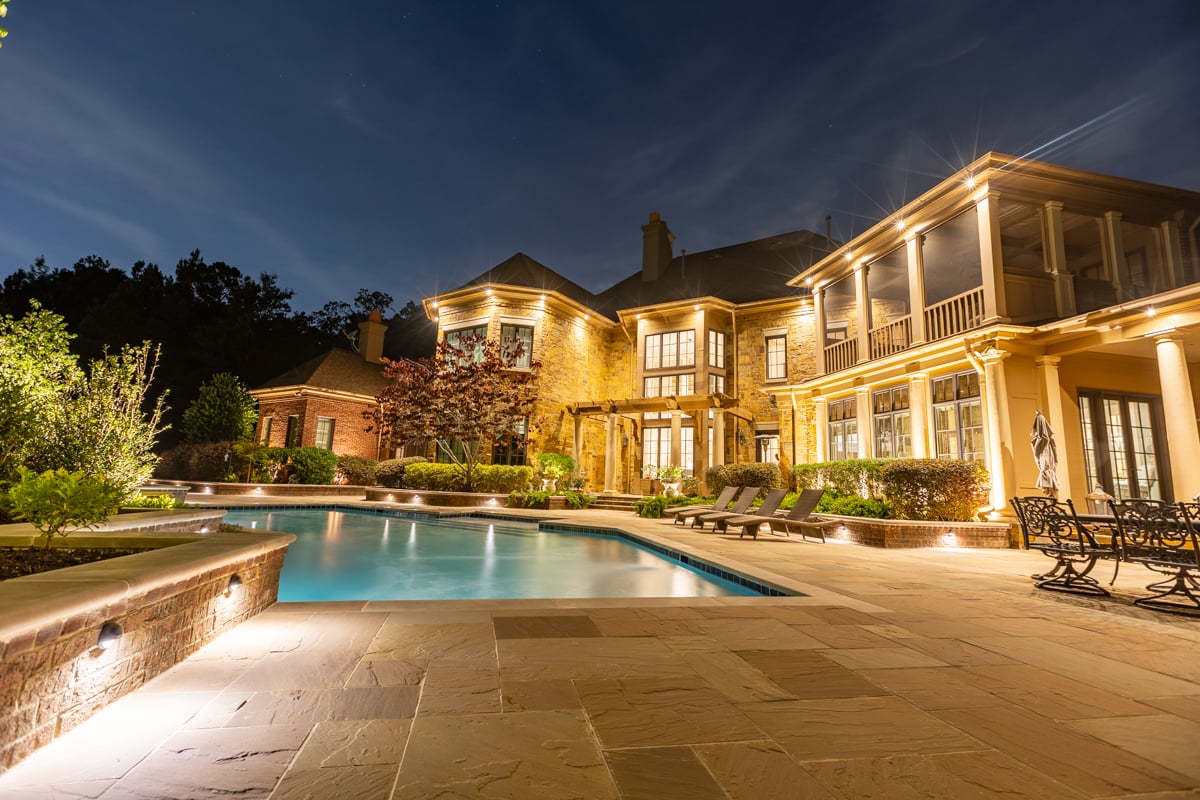
A thoughtful landscape-lighting design should not make every surface equally bright. It should create contrast, guide the eye, and highlight the best features of your home and landscape.
For example, the front walkway may need enough light for safe navigation, while nearby trees and architectural features only need subtle illumination to add depth and visual interest.
Not every existing fixture or transformer supports dimming. Before adding smart controls, a lighting professional should evaluate the equipment already installed and determine which components can be reused.

2. Control Different Outdoor Areas Separately
You should not have to illuminate your entire property just because you want to enjoy one part of it.
Smart zoning allows fixtures to be grouped by location or purpose, making it easier to tailor the lighting to different outdoor areas. A typical system may include separate zones for the front entry, driveway, pathways, backyard, pool, patio, outdoor kitchen, gardens, and security-sensitive areas.
You can then turn on only the areas you are using.
For example, a backyard may need brighter lighting while children are playing, softer lighting when adults are entertaining, and selected pathway and security lighting after everyone has gone inside.
On a property with a front landscape, pool, and outdoor kitchen, Mid South may divide the system into separate zones so the homeowner can welcome guests with brighter entry lighting, use softer lighting around the dining area, and leave only pathways and selected security fixtures operating later at night.
You can see a similar approach in this zoned backyard-lighting project, where the lighting was planned around the different ways the homeowners used their property.
This type of zoning can also reduce unnecessary lighting by keeping unused areas off or at a lower level.

3. Create Schedules and Automatic Routines
Traditional outdoor-lighting timers can be helpful, but they often need to be adjusted as sunset times change throughout the year.
Smart controls can provide more flexibility.
Depending on the system, you may be able to schedule lights based on a specific time, sunset, sunrise, or a saved routine. That means you do not have to continually reprogram the system as daylight hours shift.
You could schedule:
- Pathway and entry lighting to turn on near sunset
- Decorative lighting to dim later in the evening
- Selected security zones to remain active overnight
- Landscape lights to turn off automatically before sunrise
- A vacation routine to operate while you are away
This can make your property feel welcoming when you arrive home without requiring you to remember to turn on the lights every evening.
It is also important to understand how a system behaves when Wi-Fi or internet service is interrupted. Some systems continue running saved schedules locally, while remote access may be temporarily unavailable.
Ask your lighting professional what will continue to work if the internet goes down and whether the lights can still be operated manually.

4. Save Outdoor Lighting Scenes for Different Activities
A lighting scene is a saved combination of zones and brightness levels.
Instead of adjusting each part of your system every time you use your backyard, you can select a scene designed for a specific activity.
You might create scenes for everyday evenings, guests arriving, patio dinners, pool nights, outdoor parties, security, or holidays.
With one selection, the driveway and front walkway can brighten for arriving guests while the patio shifts to a softer, more comfortable level for entertaining.
Later in the evening, another scene might lower the backyard lighting while keeping pathways, steps, and security-sensitive areas illuminated.
A successful scene should do more than turn lights on. It should create balance, preserve visibility, and make the property feel intentional rather than overly bright.
This is where professional lighting design matters. The finished result still depends on fixture placement, beam spread, brightness, glare control, and how the different areas work together.

5. Change Colors on Compatible Fixtures
Color-changing outdoor lighting can add personality and flexibility to a property.
With compatible fixtures, you may be able to select colors for holidays, parties, sporting events, or seasonal displays directly from an app.
That does not mean your landscape has to look colorful every night.
Most homeowners still prefer warm white light for everyday architectural and landscape lighting because it creates a timeless, natural appearance. Color can then be introduced selectively on a favorite tree, water feature, entertainment area, or architectural detail.
For example, you might use warm white lighting throughout the property most of the year, then add subtle color to a few focal points during the holidays.
Color-changing fixtures, tunable-white fixtures, and standard warm-white fixtures are different products. Each option affects brightness, appearance, control, and cost differently.
A professional designer can help you decide where color adds value and where traditional white lighting will produce a more polished result.

Can Existing Landscape Lighting Be Upgraded?
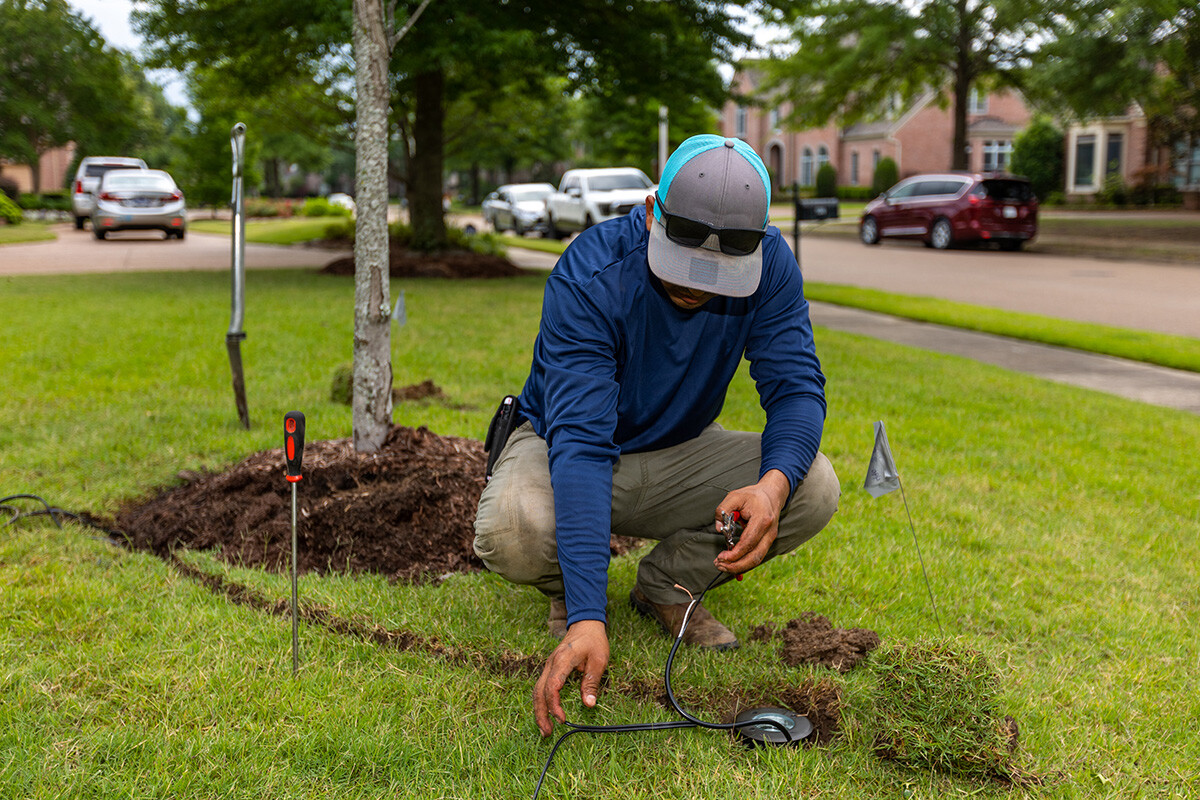
In many cases, an existing landscape-lighting system can be upgraded with smarter controls.
However, what can be reused depends on several factors:
- The age and condition of the transformer
- The type of fixtures installed
- The condition of the wiring
- The number of zones you want
- Whether you want dimming
- Whether you want color control
- The controller or home-automation platform being used
Sometimes a new controller can be added while much of the existing system remains in place. In other situations, fixtures, wiring, or the transformer may need to be replaced before the desired features will work reliably.
It is also important to evaluate the quality of the existing lighting design. Adding an advanced controller will not correct fixtures that create glare, leave dark gaps, or fail to highlight the property effectively.
An on-site evaluation is the best way to determine what can be reused and where an upgrade would provide the most value. It also helps you avoid paying for features that do not fit the way you actually use your property.
Does Smart Outdoor Lighting Require Wi-Fi?
Some smart-lighting features use Wi-Fi, while others rely on a dedicated controller, hub, Bluetooth connection, or another communication method.
Remote access from outside the home often requires an internet connection. Local schedules and basic operation may continue without internet service, depending on the system.
Before choosing a system, ask:
- What happens if the internet goes out?
- Can the lights still be operated manually?
- Will saved schedules continue to run?
- Can more than one family member use the app?
- Is remote access available when you are away from home?
- Who provides support if the controller or app stops working?
A smart-lighting system should be convenient, dependable, and simple enough for everyone in your household to use.
Is Smart Outdoor Lighting Worth It?
Smart controls can be a worthwhile upgrade for homeowners who want more flexibility from their outdoor-lighting system.
Common benefits include:
- Easier daily operation
- Better control over separate outdoor areas
- More comfortable entertaining
- Flexible security routines
- Automatic scheduling
- Less dependence on manual timers
The value depends on the size of your property, the condition of your current lighting, and the features you will actually use.
A smaller home may only need scheduling and a few zones. A larger property with multiple entertainment spaces may benefit from scenes, dimming, remote access, and more advanced controls.

Smart Outdoor Lighting for Memphis and Oxford Homes
Homes throughout Memphis, Oxford, and nearby communities often include patios, pools, mature trees, long driveways, outdoor kitchens, gardens, and gathering spaces that benefit from a customized lighting plan.
Our climate also allows homeowners to enjoy their outdoor spaces during many months of the year. Smart controls can make it easier to adapt the same system for summer evenings, fall gatherings, holiday displays, and everyday security.
A locally informed design should also account for weather exposure, drainage, plant growth, fixture placement, and future maintenance.
A fixture that looks perfectly placed today may eventually be blocked by shrubs or growing branches. Poor drainage can affect wiring and connections. Harsh weather can expose weaknesses in products that were not designed for long-term outdoor use.
Outdoor technology works best when the fixtures, wiring, transformer, controls, and programming are all designed to perform together.
Frequently Asked Questions About Smart Outdoor Lighting
Can I control my outdoor lights while away from home?
Many systems offer remote access through an app. This may allow you to check or adjust your lights while traveling, although remote operation usually depends on the controller and an active internet connection.
Can more than one family member use the lighting app?
Many platforms support multiple devices or users. Access permissions and setup requirements vary, so confirm how household access works before choosing a system.
Can all outdoor lights change color?
No. Color control requires fixtures designed for that purpose. Standard LED landscape-lighting fixtures generally cannot change color unless they contain compatible color-changing technology.
Can smart controls reduce energy use?
Schedules, zones, and dimming can help prevent lights from operating unnecessarily. Actual savings depend on fixture efficiency, the number of lights, and how the system is programmed and used.
Do I need professional outdoor lighting installation?
Professional design and installation help ensure that fixtures, transformers, wiring, controls, and programming are compatible.
An experienced lighting designer can also determine what deserves attention, avoid glare and overlighting, coordinate multiple outdoor areas, plan around trees and plant growth, and create scenes that support the way you use your property.
A professional can then show you how to operate the system, adjust schedules, create scenes, and control the lights manually if needed.
Explore Smart Outdoor Lighting for Your Home
Smart outdoor lighting can make your property easier to manage, safer to navigate, and more enjoyable after dark.
With one tap, you can brighten the walkway for arriving guests, soften the patio for dinner, or leave selected areas illuminated after the evening winds down.
Mid South Outdoor Lighting & Audio designs, installs, maintains, and upgrades outdoor-lighting systems for homeowners in the Memphis and Oxford areas.
Request a consultation to find out whether your current landscape-lighting system can support smart controls or to begin planning a new system for your Memphis- or Oxford-area home.


