Your home may look beautiful during the day, but the right front yard landscape lighting can completely change how it feels after sunset.
Architectural details stand out. Mature trees take on new depth. The path from the driveway to the front door feels more welcoming and easier to navigate.
The best lighting designs do more than add brightness. They highlight the character of your home, improve visibility around driveways and walkways, and bring dimension to trees, shrubs, and planting beds.
For Memphis homeowners, a thoughtful lighting plan should also account for the property layout, exterior materials, nearby street lighting, mature landscaping, and the way family members and guests move through the space.
Here are three front yard landscape lighting ideas that can improve your home’s curb appeal while making the property safer, more comfortable, and more enjoyable after dark.
What Are the Best Landscape Lighting Ideas for Curb Appeal?
The most effective curb appeal lighting plans usually focus on three areas:
When these areas are lit thoughtfully, they work together to create layers of light. That layered effect is what gives a home depth and visual interest at night.
The goal is not to make every part of the property equally bright. Too much light can flatten the appearance of the home, create glare, and distract from the features you actually want people to notice.
Instead, the lighting should guide the eye naturally from the street to the driveway, front entry, architecture, and surrounding landscape.

1. Highlight the Architectural Features of Your Home
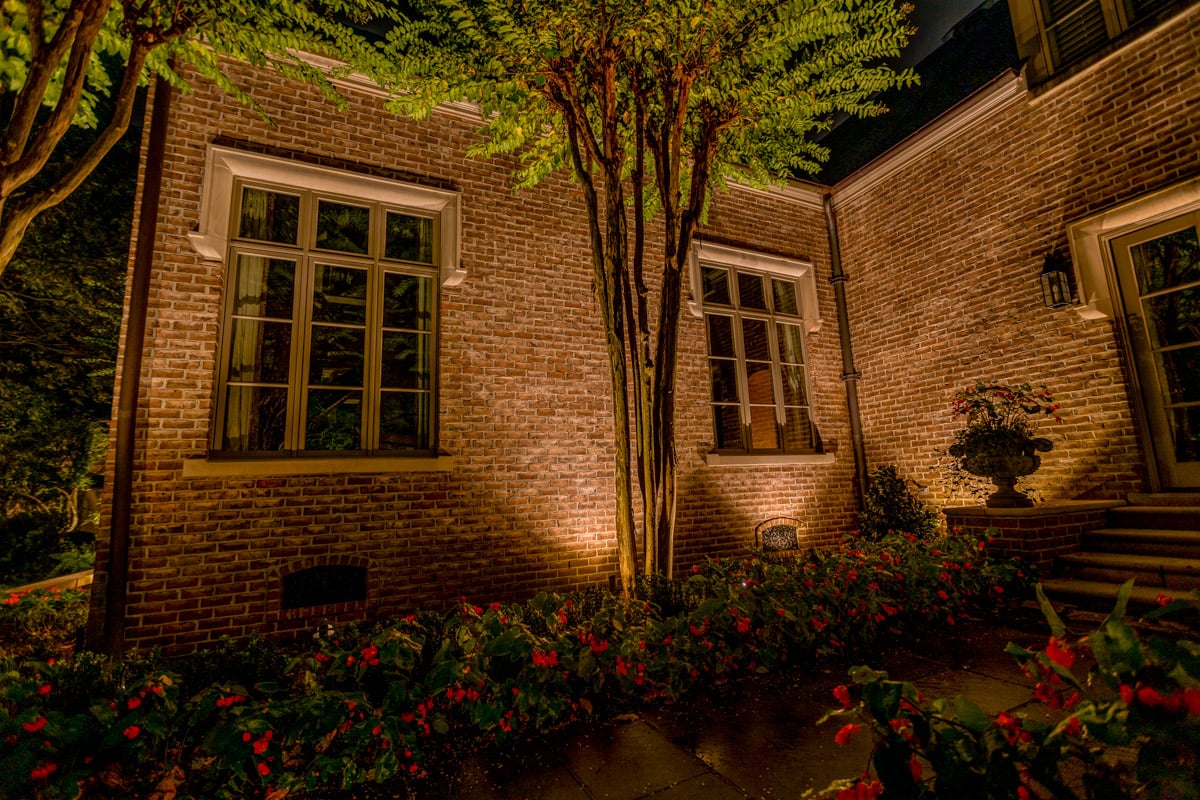
Architectural lighting is one of the best ways to improve curb appeal because it allows the most attractive details of your home to remain visible after dark.
Depending on the style of your home, that might include stone or brick walls, columns, arches, gables, dormers, chimneys, textured siding, porches, entryways, or decorative trim.
The right fixture, beam spread, and placement depend on the feature being highlighted and the effect you want to create.
Match the Fixture and Beam to the Feature
Wash lights cast a broader beam and can gently illuminate a wall or larger section of the home. They work well when the goal is to reveal texture and add depth without making the surface look harsh or overly bright.
Bullet lights create a more focused beam and are useful for drawing attention to a column, peak, chimney, or section of decorative stonework.
The important thing is not simply choosing between a wide or narrow beam. It is understanding how the surface responds to light.
Brick, stone, stucco, and painted siding all look different after dark. A textured stone wall may benefit from light placed close enough to reveal its natural shadows, while a light-painted surface may need a softer approach so it does not overpower the rest of the property.
A well-positioned fixture can make a surface look rich and dimensional. A poorly positioned one may create glare, hot spots, or distracting shadows.
Use Downlighting Where It Creates a Natural Effect
Downlighting places a fixture above the area being illuminated and directs light toward the ground. Because the light travels in the same general direction as sunlight or moonlight, it can create a softer and more natural appearance.
Around the front of a home, downlighting may be used to illuminate a porch, driveway, lawn, fountain, planting bed, or decorative planter.
The fixture should be positioned carefully so the light falls where it is useful without shining into windows, toward neighboring properties, or directly into the eyes of drivers and pedestrians.

Avoid Overlighting the Front of the House
One of the most common landscape lighting mistakes is assuming that more brightness will create a more impressive result.
Softer lighting often looks more polished because it leaves room for shadows and contrast. Those darker areas are not necessarily a problem. They help give the home dimension.
Lighting every column, gable, and architectural feature at the same intensity can make the front of the home feel busy. It is usually more effective to select a few important features and allow contrast to guide attention toward them.
A professional lighting designer should be able to explain why a certain fixture, beam angle, or brightness level is appropriate for a specific part of your home.
The purpose is not simply to illuminate the house. It is to reveal its best features in an intentional and artistic way.
2. Illuminate the Driveway and Front Walk
Great curb appeal is not only about how your home looks from the street. It is also about how people feel as they approach it.
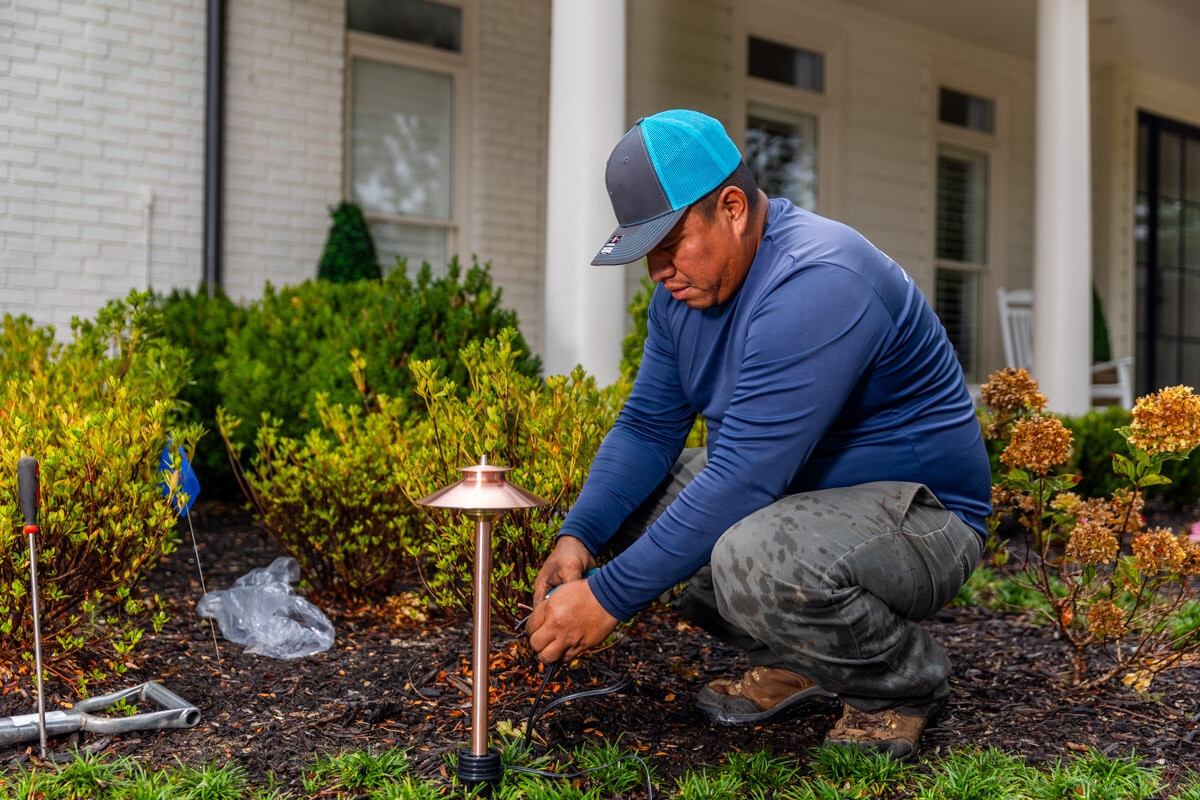
Driveway and walkway lighting can make edges, turns, steps, elevation changes, and entry points easier to see. That is especially important when guests arrive at night or family members return home after dark.
A well-lit driveway should feel welcoming and easy to navigate without directing bright, distracting glare toward drivers or pedestrians.

Match the Lighting Plan to the Property
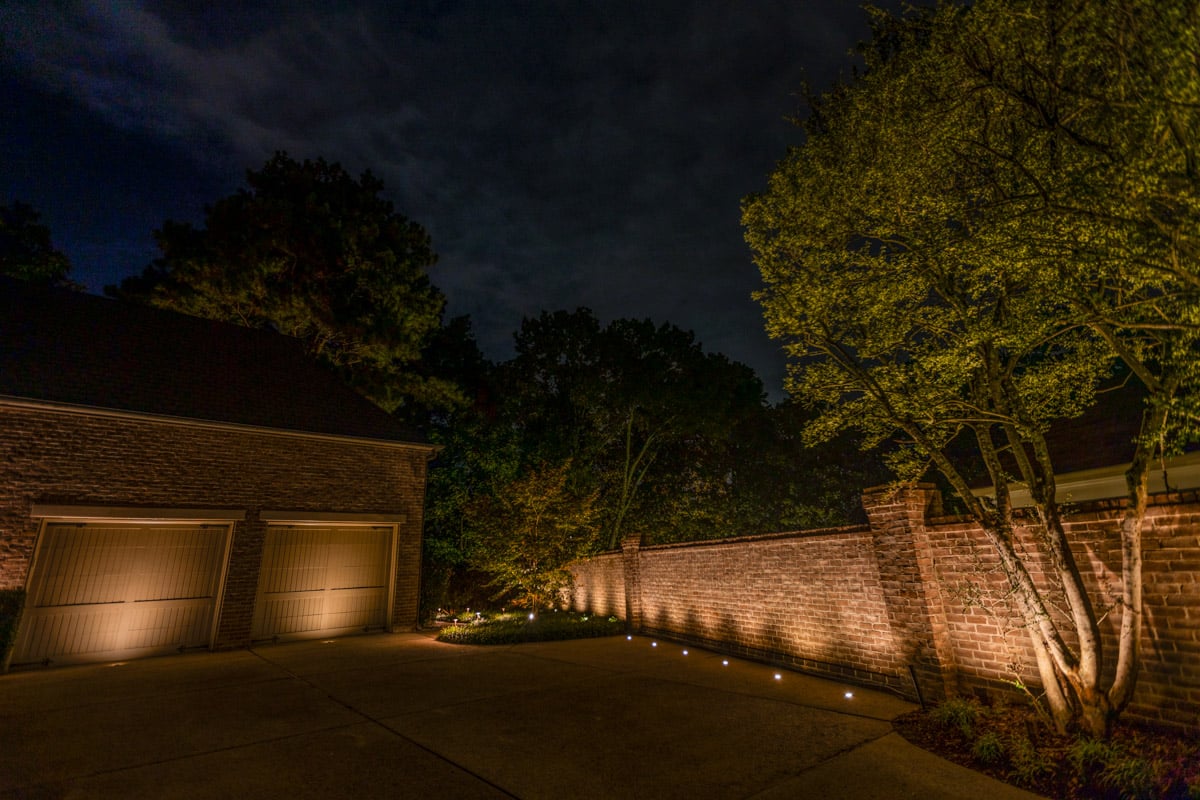
A long, winding driveway may need several carefully positioned fixtures so guests can follow the route comfortably. Downlighting from nearby mature trees may also work well on larger Memphis properties because it can spread light across a wider area without lining the driveway with visible fixtures.
A shorter driveway near existing streetlights may need much less illumination. In that situation, lighting near the entrance, parking area, or walkway to the front door may be enough.
The design should account for the driveway’s length, curves, elevation, nearby trees, street lighting, garage location, pedestrian routes, and view from the street.
Each of these factors affects where fixtures should be installed and how much light the area needs.

Reduce Glare for Drivers and Guests
One common driveway-lighting mistake is aiming a high-output fixture directly toward approaching vehicles.
This can create a “deer in the headlights” effect and make it harder for drivers to see the driveway, not easier. It may also feel harsh and uncomfortable to guests walking toward the home.
Driveway lighting should help people understand the shape of the space without making the light source itself the main thing they notice.
Depending on the property, the design may use shielded fixtures, lower fixture heights, carefully selected beam spreads, or downlighting from above. The right solution should make the route easier to follow while keeping glare under control.

Connect the Driveway to the Front Entry
The driveway should not feel visually disconnected from the rest of the front yard.
A strong lighting design creates a natural transition from the driveway to the walkway, front steps, porch, and entry door. Guests should be able to understand where to go without stopping to search for the path.
Step lights, low-level area lights, and subtle path lighting can all help. However, fixtures should not be placed so closely together that they draw more attention than the walkway itself.
The goal is to provide enough visibility to make the space comfortable without overwhelming it.
3. Add Depth to Trees, Shrubs, and Planting Beds
Your home’s landscaping plays a major role in its curb appeal.
Mature trees, ornamental shrubs, flowers, grasses, and planting beds add color, shape, and texture to the front yard during the day. With the right lighting, those same features can continue contributing to the property’s appearance at night.
The design should consider the size, shape, maturity, and location of each plant, along with how it relates to the architecture of the home.
Use Uplighting and Downlighting to Create Depth
Uplighting places a fixture near the ground and directs the beam upward. It is commonly used to highlight specimen trees, ornamental trees, tall shrubs, and other vertical features.
A narrow beam may work well for a slim trunk or columnar plant, while a wider beam may be needed for a mature tree with a broad canopy. Fixture distance also affects the result. A light installed too close may create a harsh stripe, while one placed farther away may reveal more of the trunk, branches, and canopy.
On many Memphis properties, mature trees are among the most distinctive features in the front yard. Lighting one or two of them thoughtfully can add height, balance, and a sense of scale to the nighttime view.
Downlighting from a mature tree can create a soft pattern across the lawn, driveway, or planting beds below. This technique is often called moonlighting because it resembles light filtering through branches.
Trees continue to grow, branches move, and leaves change with the seasons. Over time, those changes can affect where the light falls, which is why periodic adjustment may be needed.
Use Area Lighting to Support the Overall Design
Area lights can provide gentle illumination around lower plants, flower beds, groundcover, mailboxes, decorative planters, and small garden features.
They are usually most effective when they support the overall design rather than becoming noticeable features themselves.
The fixture should distribute light evenly without exposing a bright bulb or creating distracting hot spots. In many cases, the best lighting is the lighting you notice through its effect rather than through the fixture itself.
Let Darkness Be Part of the Design
It can be tempting to light every beautiful tree, shrub, and planting bed in the front yard.
But when everything is equally bright, nothing stands out.
A better approach is to select a few important features and use darkness to create contrast. This gives the landscape more depth and helps direct attention toward the areas that matter most.
Professional landscape lighting should feel as though it belongs to the property. The fixtures and light sources should not compete with the architecture or landscaping.

Frequently Asked Questions About Front Yard Landscape Lighting
What type of landscape lighting improves curb appeal the most?
A layered design usually creates the strongest curb appeal. This may include architectural lighting, driveway or pathway lighting, and subtle illumination for trees and planting beds. The right combination depends on the home, landscaping, and property layout.
How bright should front yard landscape lighting be?
Front yard lighting should be bright enough to reveal important features and improve visibility without creating glare. Fixture placement, beam spread, surrounding light, and surface color all affect the appropriate brightness.
Should landscape lights point toward the house?
Some fixtures may point toward walls or architectural details, but they should be aimed carefully. Poorly positioned fixtures can create glare, harsh shadows, or light that enters windows.
How many landscape lights does a front yard need?
There is no universal number. The right fixture count depends on the size of the property, architecture, landscaping, desired effect, and areas that need better visibility.
More fixtures do not automatically produce a better result. Thoughtful placement matters far more than simply increasing the fixture count.
Get More From Your Front Yard After Dark
Your front yard does not need bright light everywhere. It needs the right light in the right places.
At Mid South Outdoor Lighting & Audio, we create custom lighting plans for Memphis-area homes. We consider the architecture, driveway, landscaping, visibility needs, and overall style of the property before recommending a design.
The finished result should feel polished, comfortable, and natural, not overdone.
If you are beginning to picture what thoughtful lighting could do for your front yard, request a consultation with Mid South Outdoor Lighting & Audio. We can help you explore a lighting design created specifically for your home and the way you want it to look and feel after dark.


